

Choosing new siding is an important decision because exterior cladding affects more than a house’s appearance. For homeowners comparing siding in Austin, TX, base your decision on more than color or initial price. Consider local climate conditions, material composition, installation requirements, expected maintenance, architectural style, and manufacturer guidelines.
Table of Contents
- Start by Understanding Austin’s Climate
- Compare the Main Siding Material Options
- Compare Durability Instead of Looking Only at Price
- Evaluate Maintenance Requirements
- Look at Moisture Management
- Match the Siding to the Home’s Architecture
- Understand the Importance of Installation Quality
- Examine the Existing Siding Before Making a Decision
- Compare Estimates on the Same Basis
- Ask About Manufacturer and Workmanship Warranties
- Think About Long-Term Ownership
- Questions to Ask Before Making a Final Decision
- Frequently Asked Questions
- What siding material works well for Austin homes?
- Is fiber cement siding suitable for Austin’s climate?
- How do I know when siding needs replacement?
- How long does a siding replacement project take?
- Should old siding always be removed?
- What should homeowners look for in a siding contractor?
- Is replacing siding a good time to inspect exterior wall components?
- Frequently Asked Questions
- Conclusion
Start by Understanding Austin’s Climate
Austin homes experience prolonged summer heat, intense sunlight, humidity, seasonal storms, wind-driven rain, and year-round temperature swings. These conditions can affect exterior materials in different ways.
Some siding materials may expand or contract as temperatures change. Others may require more frequent painting, sealing, cleaning, or repair.
Before selecting siding in Austin, TX, homeowners should therefore look at how each material responds to:
- High temperatures
- Direct UV exposure
- Moisture and humidity
- Wind and storms
- Pest activity
- Seasonal temperature changes
When comparing siding in Austin, TX, consider climate suitability alongside appearance, maintenance, and cost rather than treating weather performance as an afterthought.
Compare the Main Siding Material Options
Several siding materials are commonly considered for residential properties. Each offers a different mix of appearance, durability, maintenance needs, and installation requirements.
Fiber Cement Siding
Fiber cement siding is manufactured using cement-based materials combined with reinforcing fibers. It is available in several profiles and finishes that can resemble traditional lap siding, shingles, or vertical panels.
Advantages of Fiber Cement
Homeowners often consider fiber cement because it can offer:
- Good resistance to moisture
- Resistance to rot
- Resistance to common pest damage
- Strong dimensional stability
- Multiple architectural styles
- Lower routine maintenance than some natural wood products
Fiber cement is also noncombustible, although the fire performance of a complete exterior wall depends on the entire wall assembly. Genuine Texas Exteriors provides fiber cement siding options, including James Hardie products, for residential siding projects in the Austin area.
What to Consider Before Choosing Fiber Cement
Fiber cement is heavier than many other siding materials, so proper handling, fastening, clearance, flashing, and installation practices matter. Homeowners should discuss manufacturer installation requirements with a qualified siding installation company in Austin before work begins.
Vinyl Siding
Vinyl siding is another widely available exterior option. It is generally lightweight and comes in many colors and profiles.
Possible advantages include relatively simple maintenance and no requirement for routine exterior painting when using factory-colored material.
However, homeowners should compare panel thickness, impact resistance, heat exposure, expansion requirements, fading characteristics, and installation quality before selecting a vinyl product.
Engineered Wood Siding
Engineered wood products are designed to provide a wood-like appearance while using manufactured composite materials.
They may appeal to homeowners who want the visual character of wood without some of the maintenance associated with traditional lumber.
When considering engineered wood for home siding replacement, review moisture-protection requirements, edge-sealing recommendations, warranty conditions, and manufacturer-specific installation instructions.
Traditional Wood Siding
Natural wood can provide a distinctive architectural appearance, particularly for traditional or custom homes.
However, wood generally requires more ongoing care. Depending on the species and finish, you may need painting, staining, moisture management, pest prevention, and periodic inspections.
Homeowners considering wood should compare expected maintenance responsibilities with alternative materials before making a final selection.
Compare Durability Instead of Looking Only at Price
Initial project cost matters, but it should not be the only factor when comparing siding.
A lower-cost material may require more frequent maintenance, repainting, sealing, or replacement over time. A more expensive option may offer different maintenance characteristics or a longer expected service period when properly installed and maintained.
When requesting estimates, compare:
- Material specifications
- Removal of existing siding
- Wall preparation
- Weather-resistant barriers
- Flashing details
- Trim and finishing work
- Fastening methods
- Cleanup
- Manufacturer warranties
- Workmanship coverage
A trusted siding contractor in Austin should clearly explain what the proposal includes and what it does not.
Evaluate Maintenance Requirements
Every exterior material requires some degree of maintenance, even when marketed as low maintenance.
Ask How Often the Siding Needs Attention
Important questions include:
- Will the material require repainting?
- How should it be cleaned?
- How often should you inspect joints and penetrations?
- What happens if a panel becomes damaged?
- Can individual sections be replaced?
- Are there special maintenance requirements for the warranty?
Understanding these responsibilities can help homeowners estimate the practical long-term cost of each option.
Look at Moisture Management
Siding is only one component of an exterior wall system.
Proper installation should account for water management around:
- Windows
- Doors
- Roof-to-wall transitions
- Exterior penetrations
- Utility connections
- Corners
- Trim
- Foundations
Even a high-quality siding product can experience problems when flashing, drainage, clearances, or related wall components are installed incorrectly.
For that reason, homeowners planning a home siding replacement should ask how contractors will inspect existing wall conditions after removing old material.
Match the Siding to the Home’s Architecture
Performance matters, but siding also has a major visual role.
Different profiles can dramatically change a house’s appearance.
Compare Profiles and Layouts
Common design options may include:
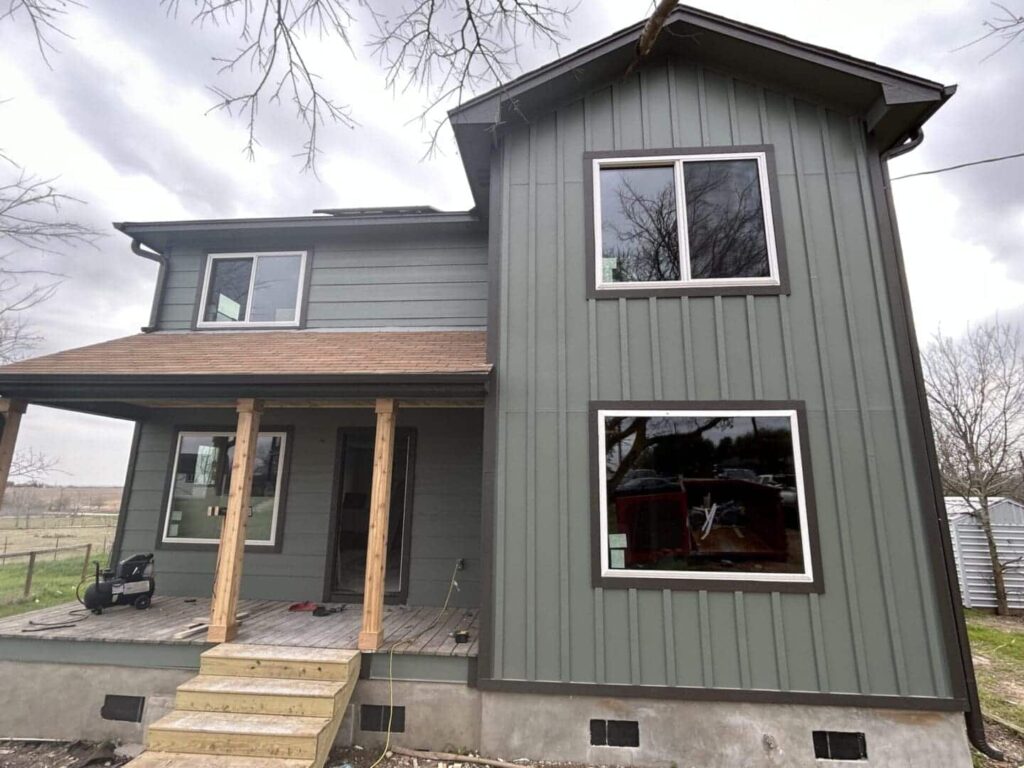
- Horizontal lap siding
- Vertical panels
- Board-and-batten styles
- Shingle-style accents
- Mixed siding profiles
- Contrasting trim
Review Samples Outdoors
Exterior colors can appear different depending on direct sunlight, shade, surrounding landscaping, roofing colors, and time of day.
Viewing samples outside can provide a more realistic idea of how the finished exterior may look.
A siding replacement company in Austin may also provide visualization tools or material samples to help Austin homeowners make informed design decisions.
Understand the Importance of Installation Quality
Product selection gets a lot of attention, but installation quality matters just as much.
Even the best siding material for a particular home can perform poorly if installed incorrectly.
Review Manufacturer Installation Requirements
Proper installation may involve specific requirements for:
- Fastener placement
- Panel spacing
- Joint treatment
- Ground clearance
- Roof clearance
- Flashing
- Caulking
- Cutting methods
- Moisture barriers
These requirements can vary by manufacturer and product.
James Hardie Fiber Cement Siding
When comparing this material with other options, homeowners should consider product specifications, installation requirements, appearance, maintenance recommendations, and warranty terms. James Hardie produces several fiber cement siding profiles, including lap siding, panels, shingles, and trim products. The referenced service information indicates that these products are among the fiber cement systems available for residential installations.
Examine the Existing Siding Before Making a Decision
Replacement projects often reveal conditions you can’t fully evaluate from the exterior.
After old siding is removed, contractors may discover:
- Moisture-damaged sheathing
- Deteriorated framing
- Improper flashing
- Pest damage
- Older weather barriers
- Previous repair work
A professional inspection can help determine whether to complete repairs before installing new siding.
Homeowners should ask how the contractor will document, explain, and handle unexpected conditions within the project scope.
Compare Estimates on the Same Basis
Two siding estimates may appear very different because they include different materials, preparation work, accessories, warranties, or installation details.
Instead of comparing only the final price, ask for enough detail to understand what each proposal includes.
A Useful Estimate Should Clarify
- Siding manufacturer and product
- Product profile
- Approximate project scope
- Removal and disposal
- Wall preparation
- Trim work
- Flashing details
- Painting or finishing when applicable
- Cleanup
- Warranty information
- Procedures for unexpected damage
A clear proposal makes it easier to compare contractors fairly.
Ask About Manufacturer and Workmanship Warranties
Material warranties and contractor workmanship warranties are not necessarily the same.
Homeowners should ask:
- What does the manufacturer warranty cover?
- How long does coverage last?
- Does the warranty transfer to a future homeowner?
- Are maintenance requirements attached to coverage?
- What installation practices could affect eligibility?
- Does the contractor provide separate workmanship coverage?
Review warranty terms directly rather than assume them.
Think About Long-Term Ownership
The best siding option is not automatically the cheapest, most expensive, or most popular product.
Instead, the right choice should balance:
- Climate suitability
- Durability
- Maintenance
- Appearance
- Project budget
- Installation requirements
- Repairability
- Warranty protection
For homeowners considering siding in Austin, TX, these factors provide a more useful comparison than focusing on a single feature.
Questions to Ask Before Making a Final Decision
Before signing a contract, homeowners can ask potential contractors questions such as:
- Which siding materials suit this home’s existing construction?
- How will the current siding and wall condition be evaluated?
- What moisture-management details are included?
- Which manufacturer instructions will be followed?
- How will unexpected wall damage be handled?
- What is included in the estimate?
- Who handles cleanup and disposal?
- What warranties apply?
Clear answers can make it easier to evaluate a siding installation company in Austin before making a final decision. Homeowners should also compare material options, installation methods, warranty details, project timelines, and how unexpected exterior issues will be handled during the work.
Frequently Asked Questions
What siding material works well for Austin homes?
No single material is ideal for every property. Fiber cement, engineered wood, vinyl, and traditional wood each have different maintenance, installation, appearance, and durability characteristics.
Is fiber cement siding suitable for Austin’s climate?
Fiber cement is commonly considered for hot, humid climates because of its moisture, pest, and dimensional stability. Performance still depends on correct installation, flashing, clearances, finishing, and ongoing maintenance.
How do I know when siding needs replacement?
Possible warning signs include cracked or damaged boards, persistent paint failure, moisture-related deterioration, rot, loose panels, pest damage, and recurring repairs. A professional inspection can help determine whether isolated repairs or a full replacement is appropriate.
How long does a siding replacement project take?
Project timing depends on the home’s size and complexity, material type, existing wall conditions, weather, preparation requirements, and the amount of trim or repair work involved. The contractor should provide a project-specific schedule before installation begins.
Should old siding always be removed?
Not necessarily. The appropriate method depends on the existing siding, wall condition, local requirements, manufacturer specifications, and proposed siding system. Removal may also let you inspect sheathing, flashing, and hidden wall conditions.
What should homeowners look for in a siding contractor?
Look for clear written proposals, relevant installation experience, appropriate licensing or insurance where applicable, manufacturer knowledge, transparent warranty information, and a clear process for handling unexpected conditions. A trusted siding in Austin, TX, also be willing to explain installation details clearly without relying on vague promises.
Is replacing siding a good time to inspect exterior wall components?
Yes. Removing older siding can expose sheathing, weather barriers, flashing, and framing that are normally hidden. This can help you identify damage or construction issues before new material covers the wall again.
Conclusion
Comparing siding options requires more than selecting a color or choosing the lowest estimate. Consider material performance, maintenance, moisture control, architectural compatibility, installation quality, warranty terms, and long-term ownership costs together. For homeowners planning siding in Austin, TX, comparing products based on the needs of the individual property can lead to a more informed decision.
Fiber cement products such as James Hardie siding may be worth considering alongside other appropriate materials, particularly when durability and manageable maintenance are priorities. Genuine Texas Exteriors works with residential siding projects across Austin and surrounding Central Texas communities, including fiber cement siding and James Hardie products.
Planning a siding upgrade in Austin, TX? Find directions to explore local siding services and learn more about suitable exterior options for your home.